 Low-cost starter
AstroMaster 70AZ
A 70 mm refractor with simple manual operation. Best suited to the Moon, bright planets, and buyers who value straightforward setup.
Check on Amazon

Practical Sonark Marine guidance for recreational boaters: what matters, what to compare, and how to choose equipment that fits the way you actually use your boat.

Start with aperture, mount stability, and how much setup you actually want. Magnification numbers alone do not tell you whether a telescope will be enjoyable to use.
For a beginner who wants help locating objects, the Celestron StarSense Explorer DX 130AZ is the most interesting starting point in this group. Buyers who want computerized GoTo can step up to the NexStar line, while a small refractor remains the simpler low-cost option.
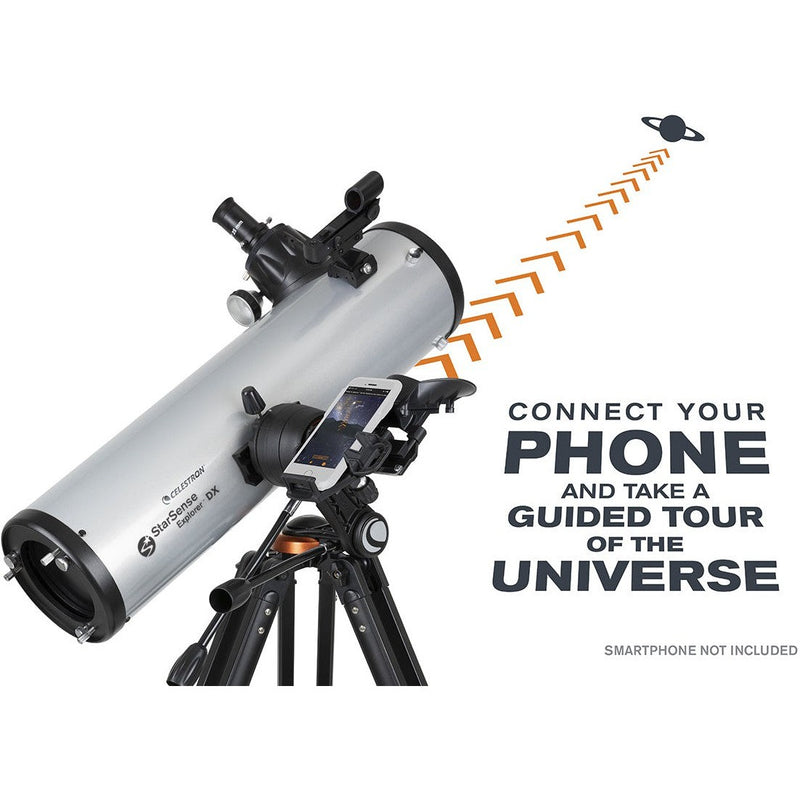
A 130 mm Newtonian reflector with smartphone-assisted target finding and a manual alt-az mount. Sonark’s closer review covers who it suits, realistic viewing, setup, and the tradeoffs a first-time buyer should know.
Low-cost starterA 70 mm refractor with simple manual operation. Best suited to the Moon, bright planets, and buyers who value straightforward setup.
Check on Amazon Compact computerized pick
A 150 mm Schmidt-Cassegrain with computerized GoTo. A practical step up when compact storage and automated pointing matter.
Check on Amazon More aperture
A 203 mm Schmidt-Cassegrain for buyers willing to accept more cost and weight in exchange for greater light gathering.
Check on AmazonAperture affects light gathering and detail. Mount stability determines whether the image settles enough to focus. Ease of setup matters because a telescope that is inconvenient to carry, align, or aim is less likely to get used. Manual mounts are simple and educational; computerized mounts add convenience but also power and alignment steps.
These are primarily visual-observing choices. An undriven manual mount is not intended for long-exposure deep-sky photography, and standard alt-az GoTo mounts have limitations for long exposures because of field rotation. If deep-sky imaging is the main goal, the tracking mount deserves as much attention as the optical tube.